As an event organiser, have you encountered the technical team asking “We need 3x16A sockets,” ”You'll need to order at least a 30kVa generator,” or “We can't be here at the moment, as we'll have to bring 200m extension leads”? It's great if you know what these numbers mean, but actually, you shouldn't trouble yourself with it, because we have a solution for you.
Solar-powered trolleybus
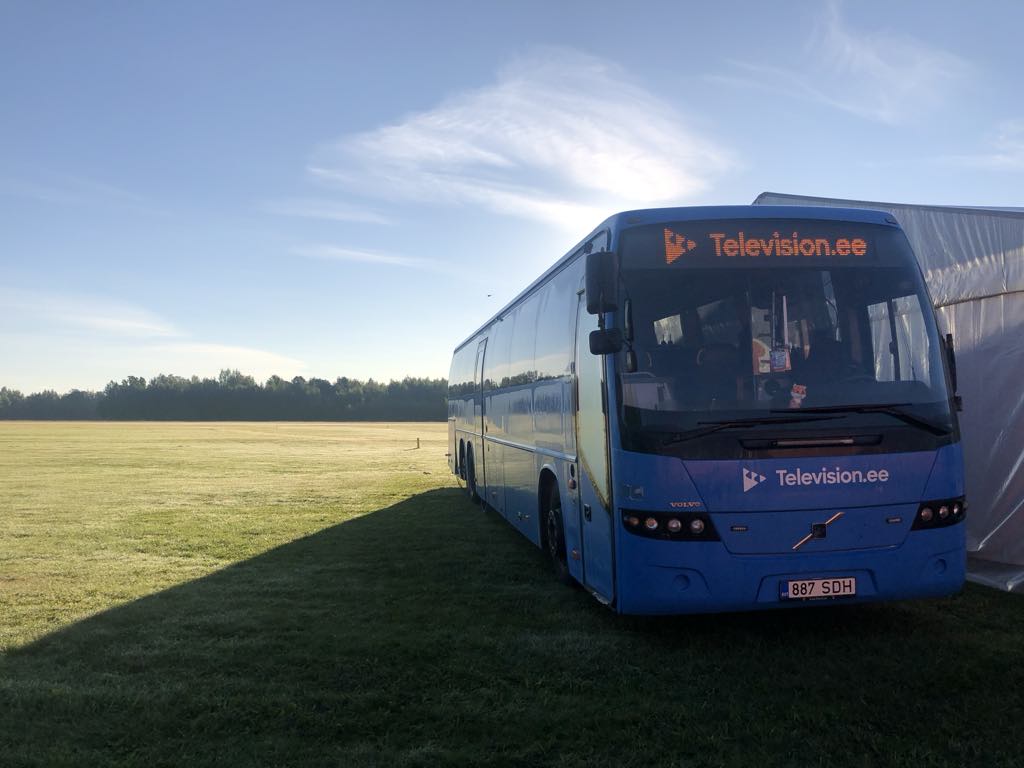
Big Blue is our answer to the question: “How can we make transfers work where there is no infrastructure?”
On our bus's roof 2.5 kWp solar panels, for recording 10 kWh batteries the heart of the entire system 12 kW inverter. But enough with the numbers, let me explain what this means to you.
This solution will ensure that the bus is able to operate its own direct transmission equipment during the summer period - without the need for a generator or an on-site power supply. This means that when we arrive, the first thing we ask is not “But where do we get the power?”. but by the time we do, the equipment is already switched on.
Yes, it is true that solar power cannot power a bus, and our Volvo coach, which has travelled a million kilometres, still runs on diesel. But instead of dinosaurs, in its 12L engine we burn Next 100% fuel made from renewable raw materials. And when we arrive, we'll switch off the engine and make no more noise ;)
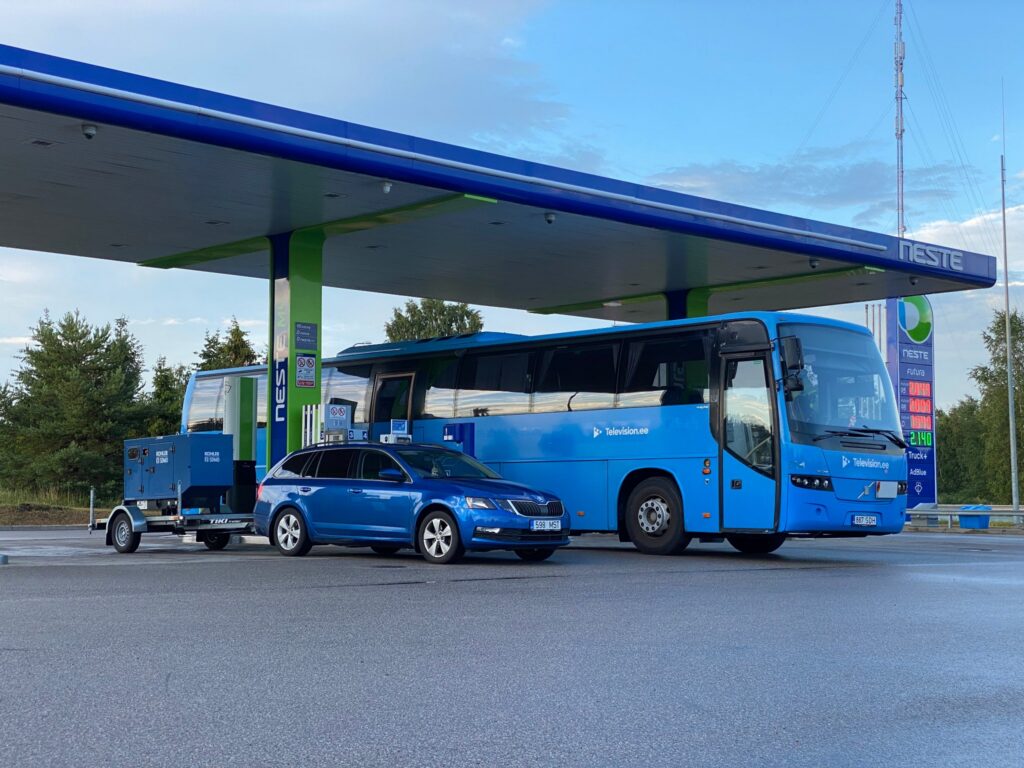
A technical solution from a valued partner
Our system was designed, installed, configured and is managed by Energiapada Ltd. When we built our first solar park years ago Rait and Ragnar immediately stood out with their specific experience, precisely Off-grid in the field of solutions.
In essence, our Great Blue, with its 35 square metres, is like a two-room flat/office, and if anything is Off-grid, so it's a bus on wheels. It is precisely thanks to this expertise and prior good cooperation that we honestly didn't even ask the Big Blue for an independent energy solution from anyone else. It's good to do business with reliable partners!
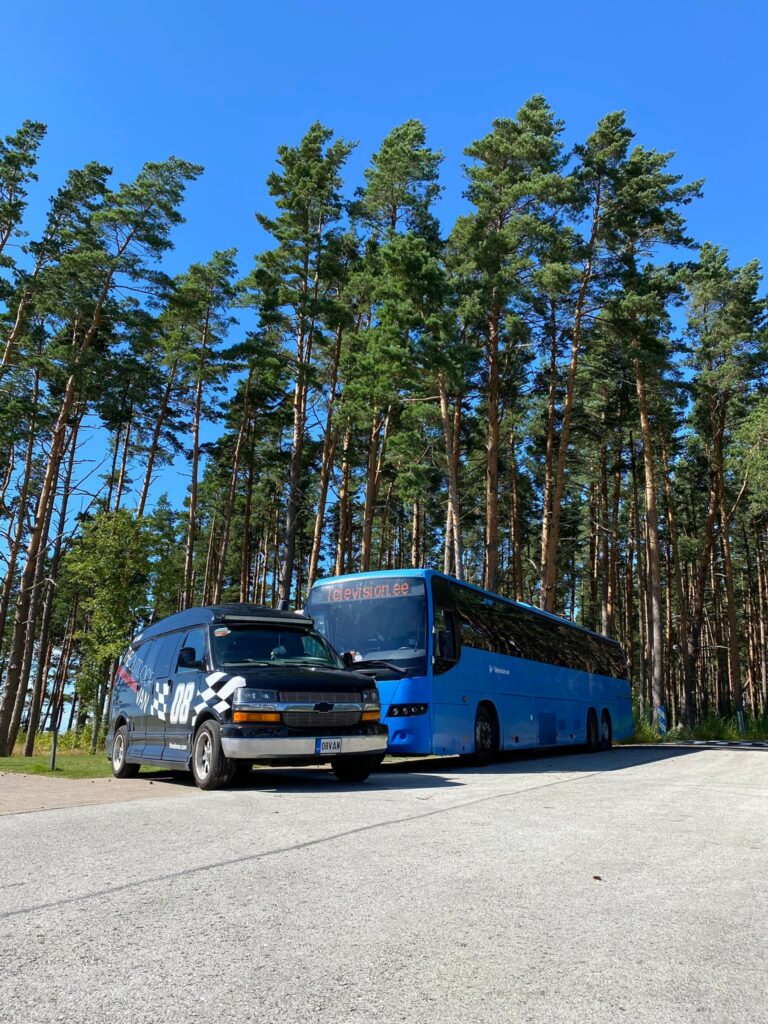
What are these numbers Really mean?
To give you a better idea:
- 2.5 kWp solar panels buzzing on a summer's day 10–15 kWh of energy. It is on:
- enough, that At home during the day: fridge, laptop, WiFi router, microwave and TV would work;
- or charge a medium electric car battery fully 10–30% range;
- or boil 120 cups of coffee in one day, using only solar power.
- 10 kWh power bank on
- enough to keep in an apartment Valgus, külmik ja internet töötamas terve öö;
- or When around 4–6 hours even when the sun isn't shining.
- 12 kW inverter allows
- to run everything we need simultaneously – multiple monitors,;
- see on rohkem, kui 3x16A circuit breaker would allow at all.
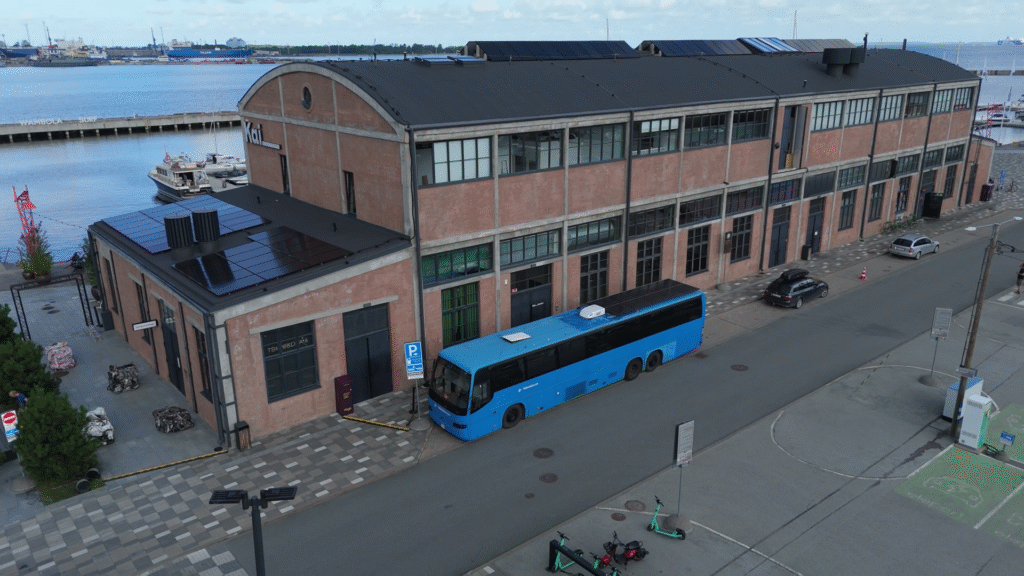
Why do we want to produce our own electricity and why should you care?
- Complete independence
When we arrive at an event, we no longer ask: “Where will we get power from?” We simply park, switch on our equipment, and start recording or broadcasting. - Children and cleanliness
Solar power means we no longer need to carry a diesel generator. This, however, ensures silence on the filming site, at least for us. - Speed and flexibility
We do not depend on event infrastructure – we are able to start work even on an empty field or in the middle of a forest, if necessary. - Sample and test platform
Sure, the Big Blue is a mobile workspace for us, but it's also a mobile example of what could be done in a smaller flat or mini-house to be off-grid.
Comparison with everyday life
| Component | Comparison in everyday life |
|---|---|
| 2.5 kWp panels | Calculate the daily electricity consumption of a small house in summer |
| 10 kWh batteries | That's enough to prepare a roast for the family and to cook a Christmas jellied meat. And then to enjoy them comfortably in the bright room all evening. |
| 12 kW inverter | Can run an electric stove and a small sauna heater simultaneously |
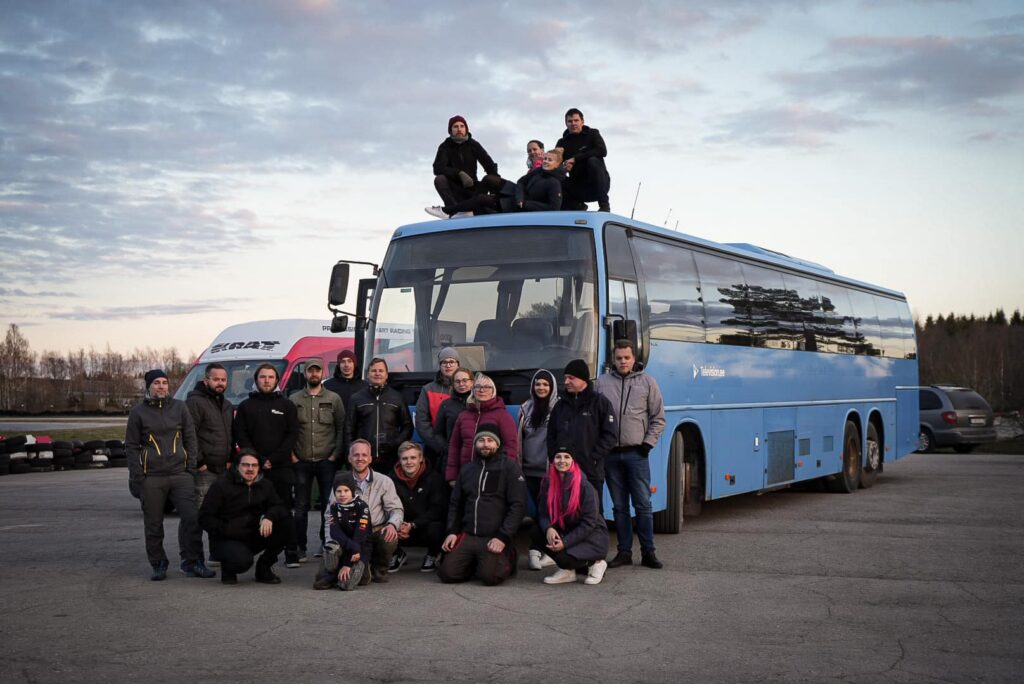
What next?
We test, develop and refine. We're thinking about how to better manage storage, considering extra batteries, and optimising our equipment's energy consumption. The aim is that in addition to our own consumption, we will also be able to fully cover the event's other energy needs.
So that it's not just a round bubble, you can also monitor real-time and last 24h production and consumption statistics during the work period.